How To Study Math
Skill at math is much like any other skill: it takes practice! Yet many students try to acquire this skill by taking shortcuts nobody considers when learning other skills. No musician would consider cramming
for a performance by reading the music the night before. No athlete would cram
for a competition by reading a book about how to play the sport. So don't study math that way either!
Here is how I recommend studying math.
- Do your homework when it is assigned. That way, you have time to incorporate the material into your ways of thinking. Math is more about habits of mind than about facts. Every new skill requires struggle at first, but with practice, it becomes quicker and more automatic. During a test, you may not have time for the struggle. Struggle beforehand so the skills are automatic by test day.
- Check your homework. Ask yourself this: What am I claiming by saying that this is the answer to that question? Then check for that.
Everybody knows the teacher is not likely to check that you really did your homework correctly. But still it's important to check your homework problems, for these reasons:
- If you are doing it wrong, you are practicing it wrong, so you are likely to get it wrong on a test.
- Good checking is not easy and takes practice. If you don't practice during your homework, you won't be able to check your work well on a test.
- Every time you check your work, you give yourself a chance to step back and think about what you actually did. This is a surprisingly useful exercise, because often we just try to do what we are
supposed
to do without thinking about what it means.
plugging it in
: If you claim that 3 is the solution for x2 = 9, you are claiming that 3 makes the equation a true statement, i.e. that (3)2 = 9. just plug in a 3 for x and see if the statement becomes true, which it does in this case. But you are also claiming that 3 is the only solution. Is it? - Read the book! The book is not just a source of homework problems. Class may move too slowly or too quickly for you, but the book moves at your pace. Furthermore, teachers sometimes make mistakes. So do book authors, but they have the benefit of editing.
- Read the book actively, with a pencil. Whenever the book says something that makes you think, write something down. Work out an example. Draw a picture. Prove anything that is not obvious to you. Talk to the author, as if he or she were listening and responding.
- Worked examples or theorems in the book provide a special opportunity, almost like having the book author as your private tutor. Stop reading right after the statement of the problem or of the theorem. Try to solve/prove it on your own. Then read what the book says. One of three things will happen:
- You will solve/prove it like the book does. In that case, by doing it yourself you will have reinforced the material much better than if you had just read it. Furthermore you will have the author's confirmation that your thinking is correct.
- You will think you have solved/proven it, but your work is different from what's in the book. In that case you need to decide if your work is just different or if it is incorrect. Either way, you will learn it better for having tried.
- You will have no idea how to solve/prove it. Even in this case, when you finally do read the book's solution/proof, it will make much more sense to you because you have tried it first. Often you will get an
aha
moment when you discover what you had been missing. If you simply had read it before having tried it on your own, your learning will be much more superficial.
- Of course, you can cram for a math test, assuming that you have done the work all along. Cramming is a great way to remind yourself of things you have already learned. It is not a great way to learn things for the first time.
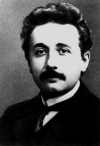
- Be passionately curious! Einstein was once a student like you. While he may have exaggerated when he said he had
no special talent,
his point is that what made him Einstein was his passionate curiosity. The more passion you bring to something, the better you will learn it, and the more you will enjoy it. Maybe, like Einstein, you will some day make your own contributions. Einstein made many of his greatest contributions in 1905, when he was about 26 years old.
Finally, even though you may have to do this stuff, keep it fun. You will do it better. And, for an added bonus, while you are having fun, you will be learning about one of the great pillars of human intellectual history!
passionatelycurious.com • Math tutor • Computer Science tutor • What's with the '90s Web site? • contact